Tungsten Carbide Rods

Carbide Rods with Two Helical Coolant Holes

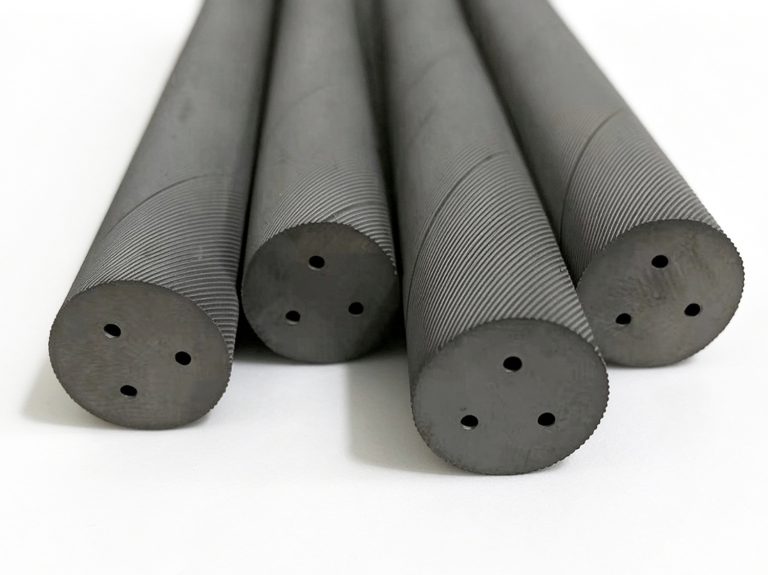
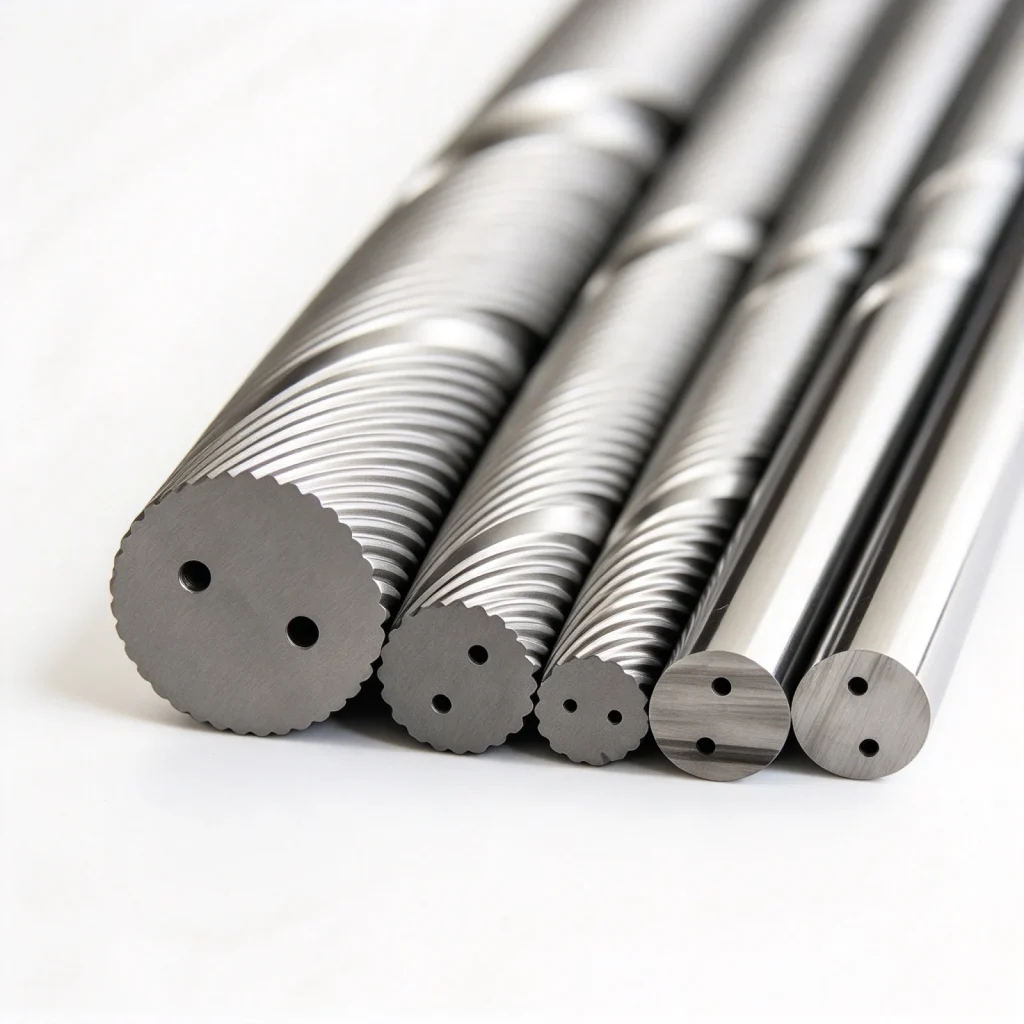
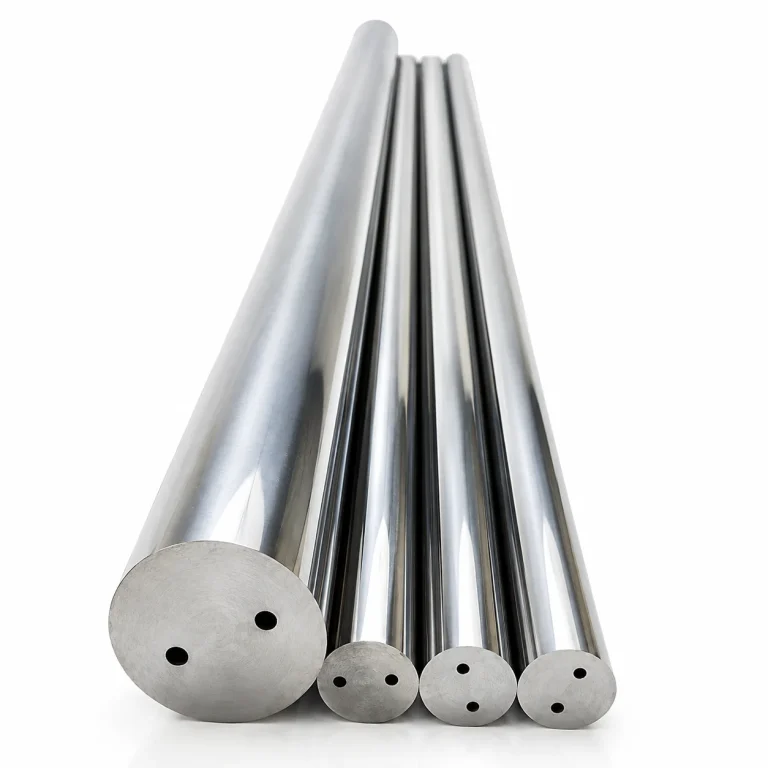
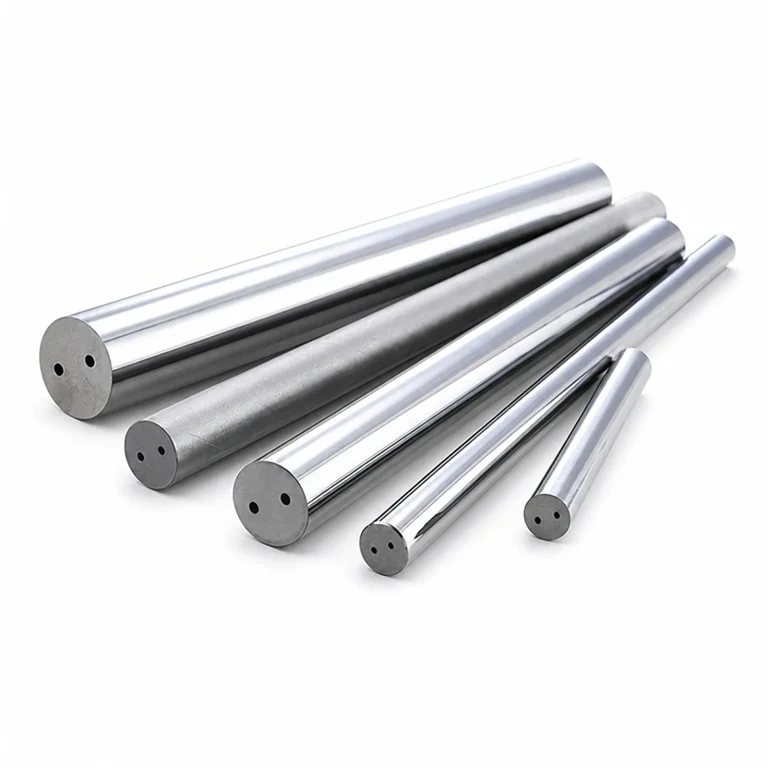
Tungsten carbide rods with two helical coolant holes, available in 15°, 30° and 40° helix angles. Diameters range from 4.3 mm to 32 mm, lengths from 10 mm to 500 mm.Select the helix angle to match your drill design. Available as sintered blanks, rough ground or precision ground to h6 tolerance, we provide cut-to-length service.

Grade
MC06, MC55, MC40, MC46, MC44F, MC47S
Tolerance
Ground to h6

Overview

About Carbide Rods with Two Helical Coolant Holes

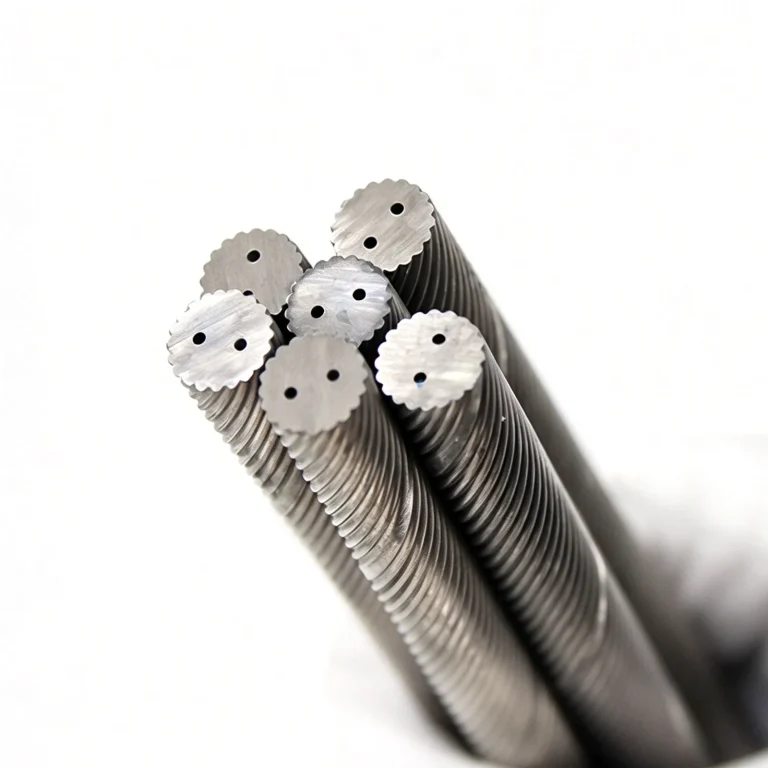
Carbide rods with two helical coolant holes follow the flute helix of twist drills, enabling coolant to reach both cutting edges after flute grinding. Select the helix angle to match your drill design. Available as sintered blanks, rough ground or precision ground to h6 tolerance, we provide cut-to-length service.

Specifications & Features

  • Raw Material: Tungsten Carbide, Cobalt Powder / Nickel Powder
  • Production Process: Raw material preparation, Compression molding, Sintering, Heat treatment, Machining and Precision grinding
  • Available Grades: MC06, MC55, MC40, MC46, MC44F, MC47S
  • Structure: Two helical coolant hole carbide rod (tungsten carbide rod with two spiral coolant holes, helix angle 15° / 30° / 40° optional)
  • Size Range: Diameters from 4.3 mm to 32 mm, lengths from 10 mm to 500 mm. Standard 330 mm two helical coolant hole carbide rods are in stock.
  • Surface Condition:Sintered Blank / Precision Ground
  • Tolerance: Sintered blank tolerance, rough grind tolerance, precision ground h6 tolerance; separate tolerance for hole diameter, hole spacing & lead
  • Custom service: Cut-to-length, special hole diameter, special tolerance, custom specifications, MQL compatible version
  • Features: Excellent cooling performance, smooth chip removal, wear resistance, high rigidity, long tool life
  • Application: Coolant-fed end mills, drills, reamers, high-feed cutting tool blanks, internal coolant carbide rod blanks

Material Introduction

GradeCobalt content(%)Density (g/cm³)Hardness
HRA
TRS (MPa)
MC06614.992.22800
MC55914.593.83800
MC401014.4591.83600
MC461014.492.33800
MC44F1214.1592.64200
MC47S1214.291.44000
All dimensions are for reference. Custom sizes, helix angles and hole configurations are available upon request.

Send your drawing or requirements and our engineers will review them and reply with questions or a quotation.
Technical Data

Carbide Rods with Two Helical Coolant Holes Specifications

Carbide Rods with Two Helical Coolant Holes specifications
GradeMC06, MC55, MC40, MC46, MC44F, MC47S
MaterialTungsten Carbide, Cobalt Powder / Nickel Powder
DimensionsDiameters from 4.3 mm to 32 mm, lengths from 10 mm to 500 mm
ToleranceGround to h6
Technical SpecificationsTwo helical coolant holes, helix angle 15°, 30° or 40°
Carbide Rods with Two Helical Coolant Holes

Applications

Where Carbide Rods with Two Helical Coolant Holes Are Used

01

Twist drills with internal coolant

Helical holes follow the flutes to both cutting edges.

02

MQL drilling

Selected sizes are suitable for minimum quantity lubrication.

Made to Your Drawing

Need a Different Size or Shape?

Send your drawing or specification. Our engineers confirm feasibility, grade and tolerance before quotation.

  • Diameter and length
  • Coolant hole layout
  • Chamfer and end form
  • Grade for your application

FAQ

Carbide Rods with Two Helical Coolant Holes FAQ

Which helix angle should I choose?

Choose the angle that matches the flute helix of your drill: 15°, 30° or 40°. The lead in the tables is the axial length of one full turn of the coolant hole.

What does "On request" mean in the tables?

Those sizes are not standard stock and are made to order. Sizes marked K40 or K46 are standard stock.

Can you supply rods for MQL?

Yes. Sizes marked MQL in the 30° table are suitable for minimum quantity lubrication.

Request a Quote

Get a Quote for Carbide Rods with Two Helical Coolant Holes

Tell us what you need and our engineers will review it and reply with questions or a quotation.
Request a Quote →

For a faster quotation, include:

  • Drawing (PDF) or main dimensions
  • Tolerances and surface requirements
  • Preferred grade or operating conditions
  • Quantity and delivery schedule