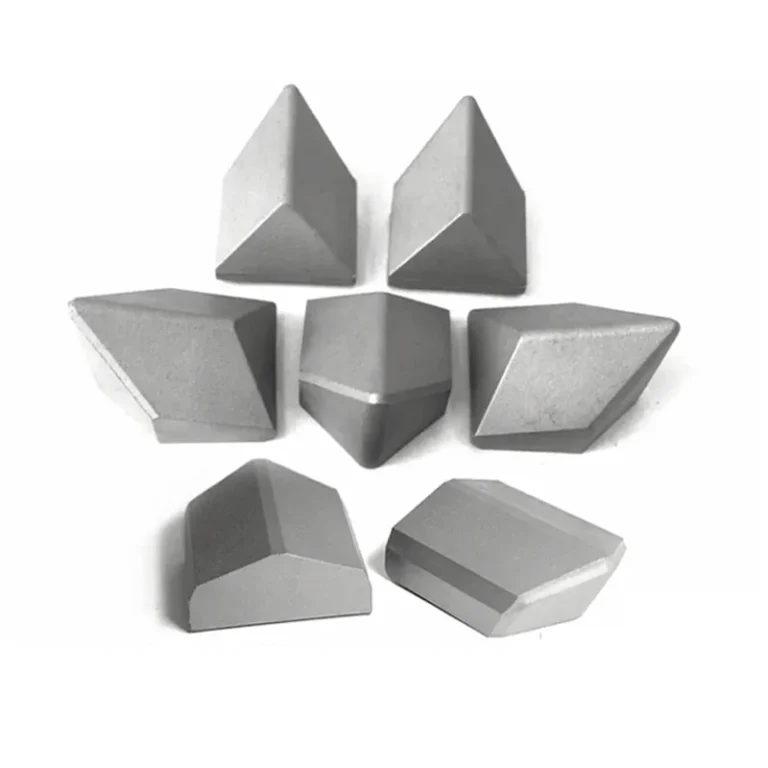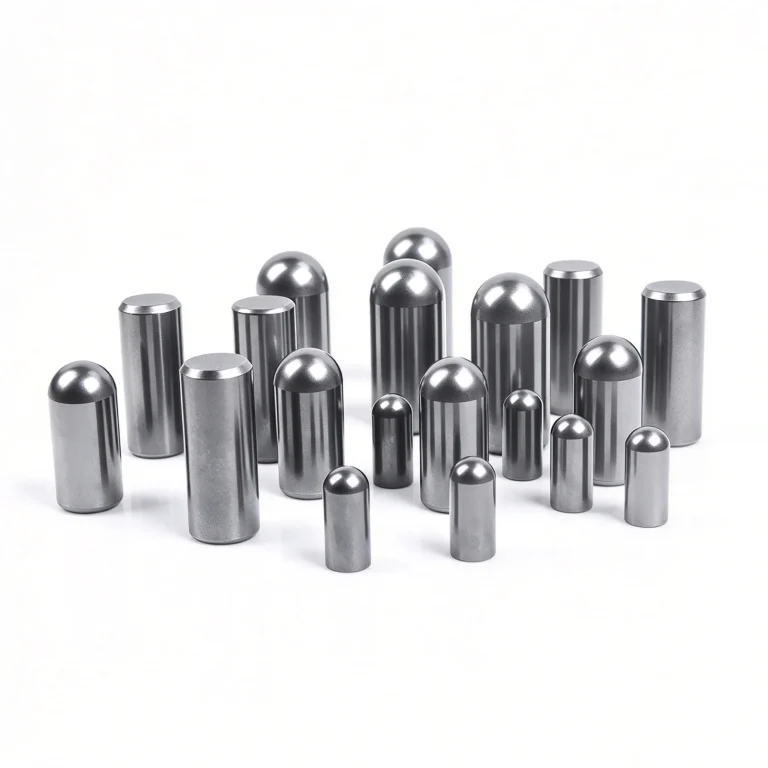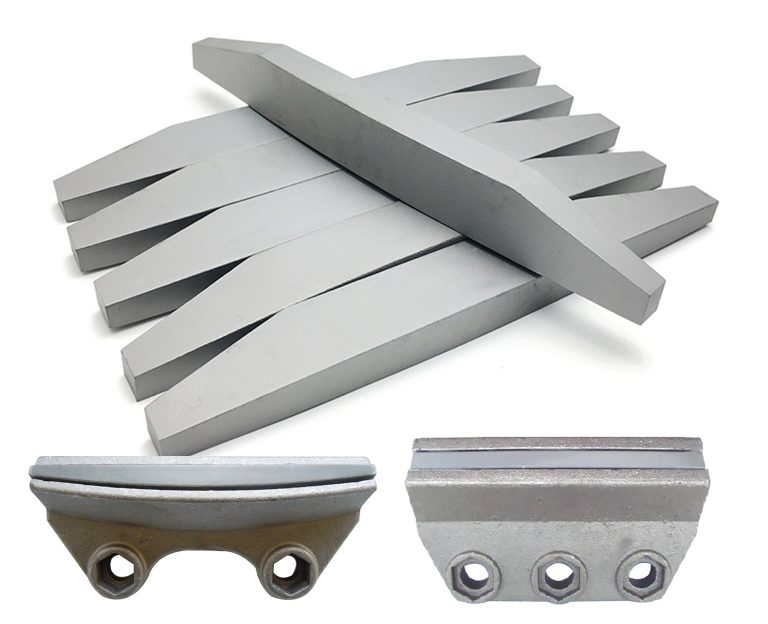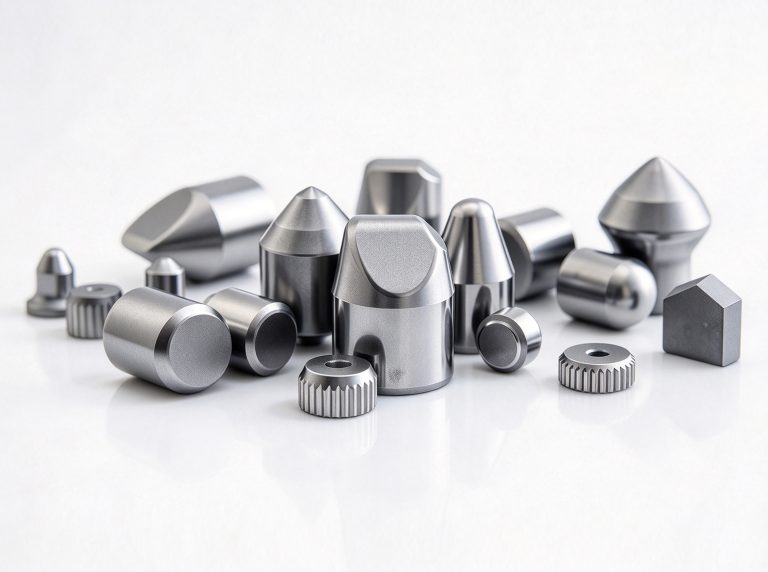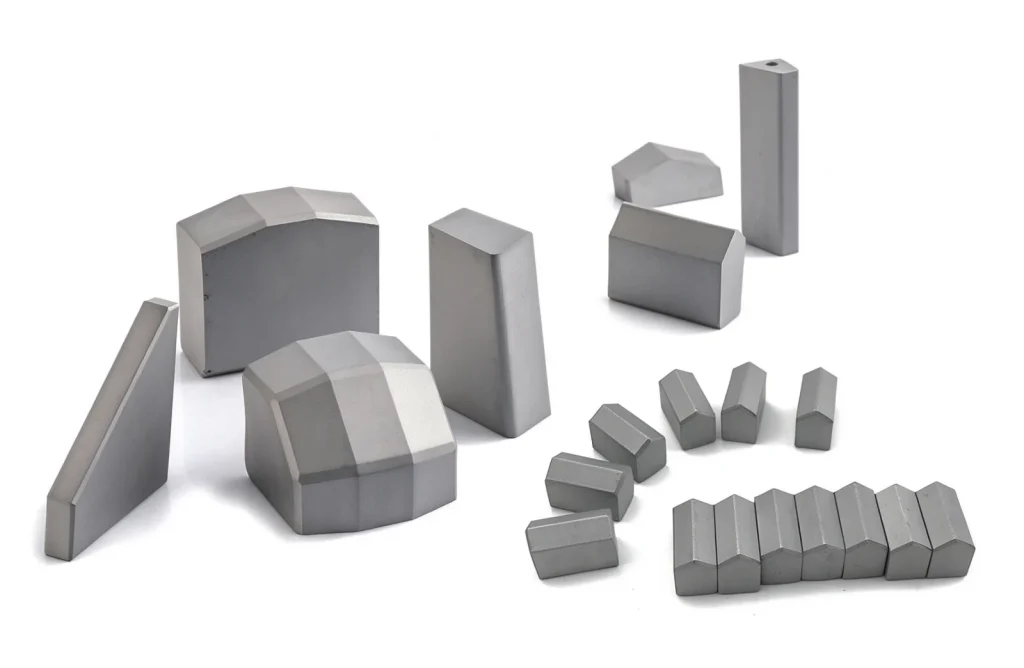
Tungsten carbide brazed tips include chisel tips and cross tips. They are brazed onto rock drill bits for mining, tunnelling and quarrying operations. The suitable carbide grade is selected according to rock hardness, measured by the Protodyakonov hardness coefficient (f value).
Our carbide brazed tips are manufactured by HIP sintering with stable microstructure, excellent hardness and impact toughness. We provide multiple internal grades to match different rock conditions from soft rock to extremely hard rock. Custom sizes, shapes and grades are available upon request for your rock drilling projects.
Key Features
- High hardness, good wear resistance and outstanding impact toughness for rock drilling
- Various grades available, matched by rock Protodyakonov hardness coefficient f
- Available in chisel tips, cross tips, button inserts and blade inserts
- HIP sintered, consistent performance, long service life
- Support OEM & ODM, custom drawing and small batch production
- Widely compatible with percussion bits, rotary prospecting bits and tricone bits
Grade Properties
| Grade | Recommended ISO Grade | Density (g/cm³) | Hardness (HRA) | T.R.S (MPa) | Performance & Application |
|---|---|---|---|---|---|
| YG4C | K01 ~ K05 | 15.1 | 90.0 | 1800 | Mainly used as small button inserts for percussion drill bits, for drilling soft and medium-hard rock formations. |
| YG8 | K20 | 14.7 | 89.8 | 2800 | Used for coring crowns, electric coal drill bits, coal cutting picks, oil cone bits and scraping knife bits, for geological prospecting, coal mining and oil well drilling. |
| YG8C | K20 | 14.7 | 89.0 | 2700 | Mostly used as button inserts for small and medium percussion bits and rotary prospecting bits, for drilling soft and medium-hard rock formations. |
| YG9C | K20 ~ K30 | 14.6 | 88.0 | 2750 | Suitable for strip inserts, conical button inserts of rotary percussion bits and geological prospecting bits, for drilling soft and medium-hard rock formations. |
| YG10C | K30 | 14.5 | 87.5 | 2800 | Primarily used as button inserts and blade inserts for rotary percussion bits, for drilling medium-hard and hard rock formations. |
| YG11C | K20 ~ K30 | 14.4 | 87.0 | 2850 | Largely for blade inserts and button inserts of percussion bits and tricone bits, for drilling medium-hard, hard and very hard rock formations. |
| YG13C | K40 | 14.2 | 86.0 | 2900 | Predominantly for button inserts of tricone bits and blade inserts of rotary percussion bits, for drilling hard and very hard rock formations. |
| YG15C | K40 | 14.0 | 85.0 | 3000 | For oil cone drill bits, suitable for medium-soft and medium-hard rock formations. |
Grade Selection Guide by Mining Conditions
Rule: Higher cobalt content & coarse grain (suffix C) deliver better impact toughness but lower wear resistance. Lower cobalt content & fine grain bring higher hardness and wear resistance, yet they are more vulnerable under heavy impact. Grade selection depends on Protodyakonov rock hardness coefficient (f), rock abrasiveness and impact load.
| f value | Rock Type | Typical Rock | Recommended Grade | Key Focus |
|---|---|---|---|---|
| f<4 | Soft & highly abrasive rock | Coal seam, shale, weathered rock, soft sandstone | YG4C | High wear resistance, light impact |
| f=4~8 | Soft-medium / medium-hard rock | Limestone, sandstone, slate | YG8, YG8C | Balanced wear resistance & toughness, general purpose |
| f=8~12 | Medium-hard rock | Mixed granite, gneiss, diorite | YG9C, YG10C | Balanced performance for medium impact |
| f=12~16 | Hard rock | Granite, magnetite, quartz sandstone | YG11C | Coarse grain structure, anti-chipping |
| f>16 | Very hard & fractured rock | Dense quartzite, hard granite, fractured zones | YG13C, YG15C | Maximum impact toughness |
Failure Reference
- Fast rounding / excessive wear → Switch to lower cobalt, harder grade
- Chipping & fracture → Switch to coarse-grain C grade with higher cobalt
Applications
✅ Mining, tunnelling, quarrying
✅ Geological prospecting, coal mining, oil well drilling
✅ Percussion drill bits, rotary prospecting bits, tricone bits
✅ Rock drilling for soft, medium-hard, hard and very hard rock formations
Send your drawing or requirements and our engineers will review them and reply with questions or a quotation.